
Scoring with methodology frameworks: SPIN, MEDDIC, BANT, and Challenger
Outdoo scorecards can be built around a named sales methodology, such as SPIN, MEDDIC, BANT, or Challenger, with objectives that map directly to that framework. This lets roleplay and live call scoring reinforce the same language your team already uses in deal reviews, instead of inventing separate criteria from a blank page.
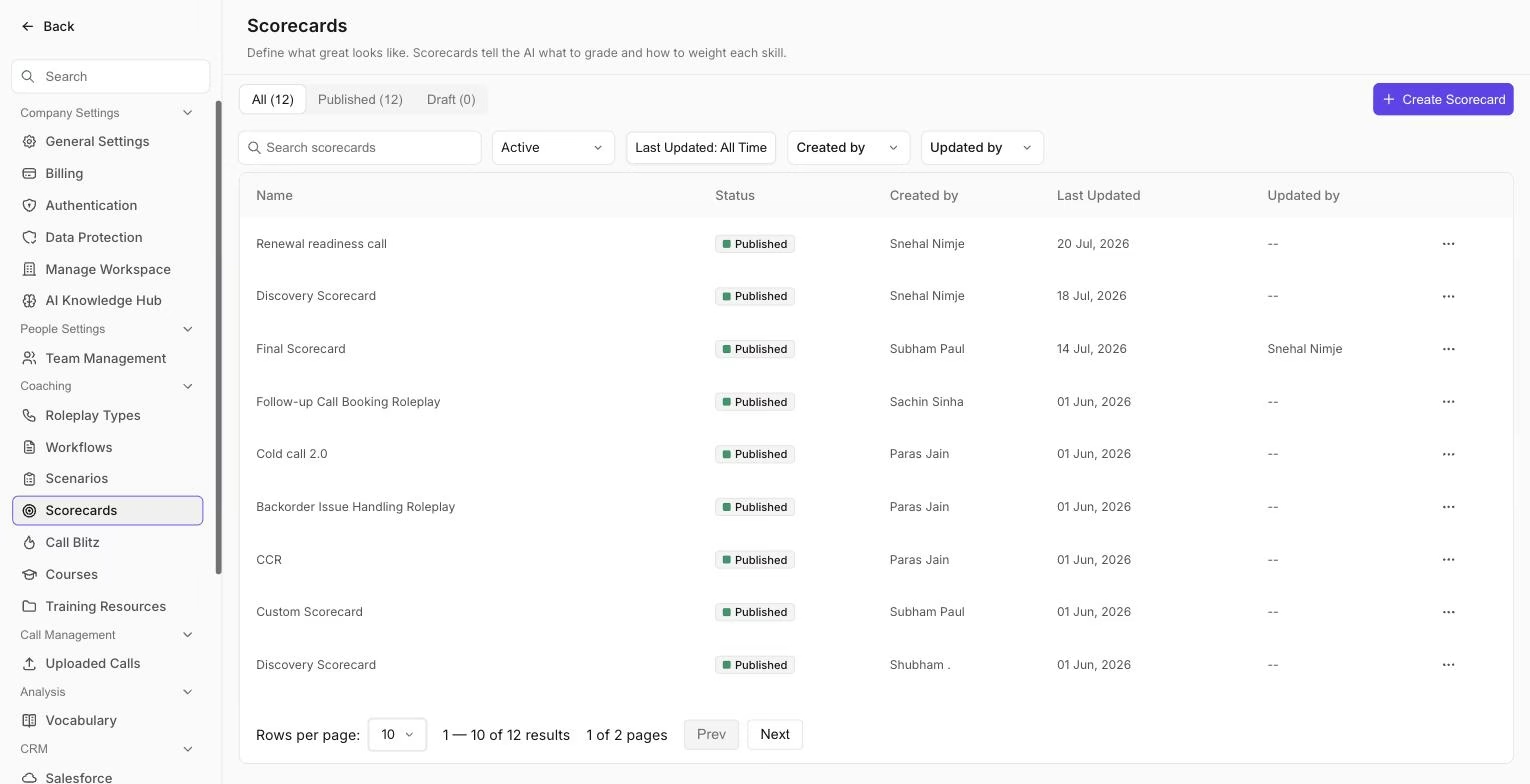
Scorecards for each methodology live alongside your other scorecards under Manage > Scorecards.
What each framework emphasizes
SPIN
SPIN organizes a discovery conversation around four question types: situation questions that establish context, problem questions that surface pain, implication questions that explore the cost of that pain, and need-payoff questions that get the buyer to articulate the value of solving it. A SPIN-aligned scorecard should score whether the team member progressed through these question types in order, rather than jumping straight to pitching.
MEDDIC
MEDDIC is a qualification framework built around six areas: metrics, economic buyer, decision criteria, decision process, identify pain, and champion. A MEDDIC-aligned scorecard typically has one objective per letter, so a reviewer can see at a glance which parts of qualification a team member covered and which they skipped.
BANT
BANT is a simpler qualification framework covering budget, authority, need, and timeline. A BANT scorecard is a good fit for shorter or earlier-stage conversations, such as SDR qualification calls, where a full MEDDIC breakdown would be more detail than the call warrants.
Challenger
The Challenger approach centers on teaching the buyer something new about their business, tailoring that message to their specific situation, and taking control of the conversation rather than being purely reactive to buyer requests. A Challenger scorecard scores whether the team member introduced a new insight, connected it to the buyer's specific context, and drove the conversation toward a clear next step.
How to build a framework-aligned scorecard
The steps are the same general scorecard-building flow used for any scorecard, with the framework driving what you name and weight each objective.
- Open Manage > Scorecards and click Add Scorecard.
- Choose a template if one matches your framework, or start from Custom to build objectives from scratch.
- Add one objective per framework component (for example, the four SPIN question types, or the six MEDDIC letters) rather than folding several components into one broad objective. This keeps the resulting report readable and lets you see exactly where a team member is strong or weak within the methodology.
- Set weighting to reflect what matters most for the call type. For a late-stage qualification call, weighting economic buyer and decision process higher in a MEDDIC scorecard makes sense; for an early discovery call, weighting the SPIN implication and need-payoff questions higher does the same job.
- If you have an internal playbook describing how your team applies the framework, attach it as a resource during AI scorecard generation so the wording and emphasis match your own materials rather than a generic version of the framework.
- Review the draft objectives, adjust language and weights, and publish.
You can also generate a first draft with AI by describing the framework and call type in the prompt, then refining the output. See Create a scorecard using AI (with resources) for that flow.
Keeping it consistent across roleplay and live calls
Because the same scorecard structure applies to both practice roleplays and real calls, a framework-aligned scorecard lets you compare how a team member applies MEDDIC or Challenger in a simulated conversation against how they apply it on a live deal. If a team member scores well on Champion in roleplay but consistently misses it on real calls, that gap is worth a coaching conversation on its own.
Hope this article was helpful. For any queries, please write to support@outdoo.ai