
Best Practices for L&D Teams
L&D teams using Outdoo are typically responsible for the broader learning ecosystem: onboarding programs, ongoing certification tracks, LMS integration, and proving ROI to stakeholders. This guide covers how to build programs that scale, integrate with your existing infrastructure, and actually change behavior.
Integrating Outdoo into your learning ecosystem
Use SCORM export to keep your LMS as the system of record
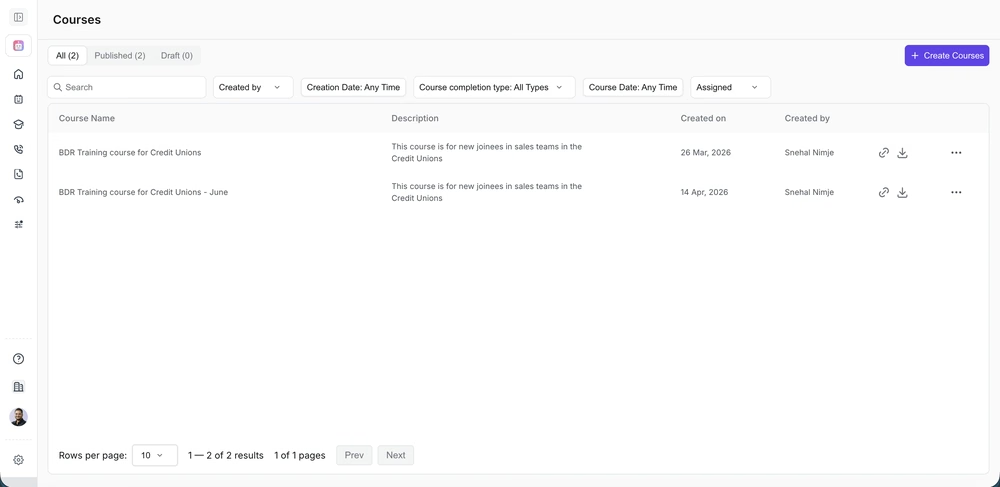
If your organization tracks learning in an LMS (Docebo, Cornerstone, Workday Learning, SAP SuccessFactors, TalentLMS, Moodle), you do not need to manage completion data in two places. Export any Outdoo course as a SCORM package. Completion and pass/fail data sync into your LMS automatically.
The practical workflow: build the course in Outdoo (where the roleplay and simulation practice lives), export it as SCORM, and import into your LMS. Learners launch from the LMS, practice inside Outdoo, and the record lands back in your system.
Use xAPI if you need richer data
SCORM gives you completion and pass/fail. xAPI gives you granular activity data, including individual roleplay attempts, scores by criterion, and time on task. If your LRS supports xAPI and you need to report beyond completion, use xAPI rather than SCORM. Talk to your Outdoo admin about enabling this.
Designing programs that scale
Build role-based tracks, not one-size-fits-all programs
An SDR and an enterprise AE need completely different practice scenarios. A new hire needs a different track than an experienced rep going through a messaging refresh. Build separate courses for each role and situation. The marginal effort of building two courses instead of one is much lower than the cost of training people on scenarios that do not match their job.
Use certifications as readiness gates, not completion rewards
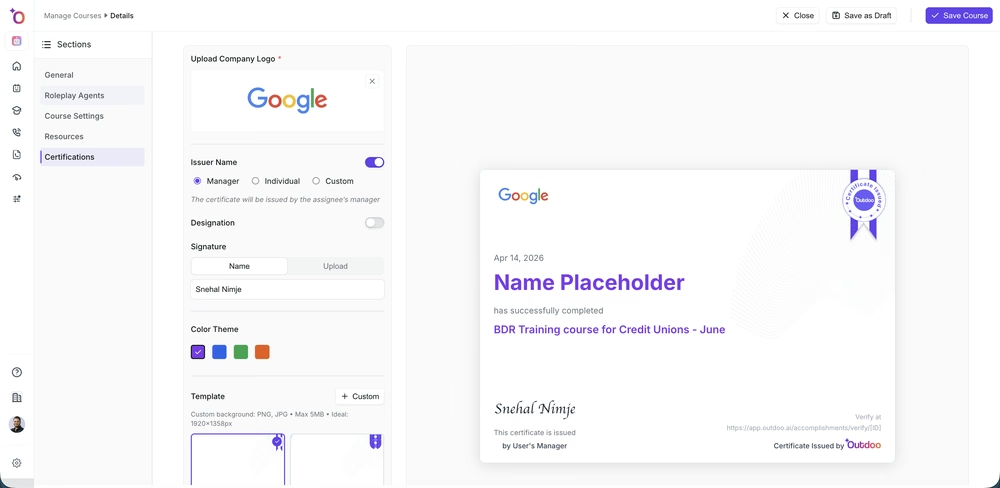
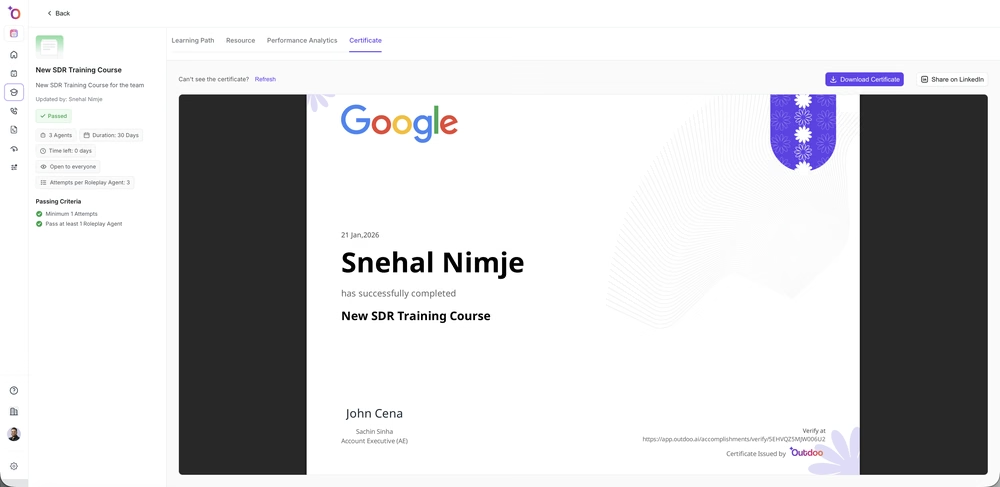
A certification awarded for clicking through modules tells you a person completed training. A certification that requires a passing score on a final roleplay tells you they can perform the skill. Set scoring thresholds for certifications in every program. The threshold can be low to start — you can raise it as your agents get more calibrated — but there should always be one.
Set up reminders to drive completion
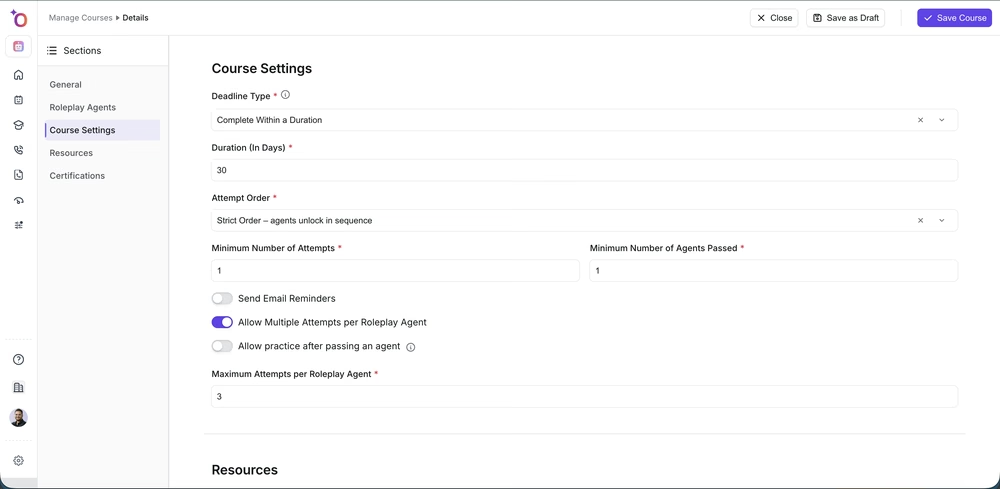
Outdoo courses support automated reminders at configurable intervals. Set them before you launch every cohort. Most learner drop-off happens because of forgetting, not resistance. A reminder at day 3 and day 7 of a 10-day program significantly improves completion rates without any manual follow-up.
Running onboarding cohorts
Structure cohorts before your first start date
Create the cohort in Outdoo before new hires join. Assign the course, set the certification threshold, and configure the timeline. On day one, every new hire sees exactly what they need to complete and by when. No onboarding manager has to manually assign anything.
Align practice to the real ramp timeline
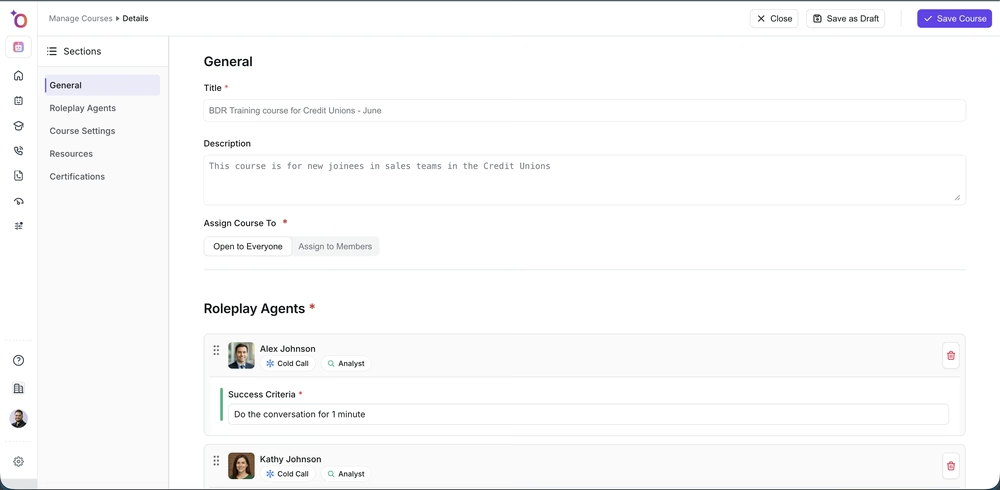
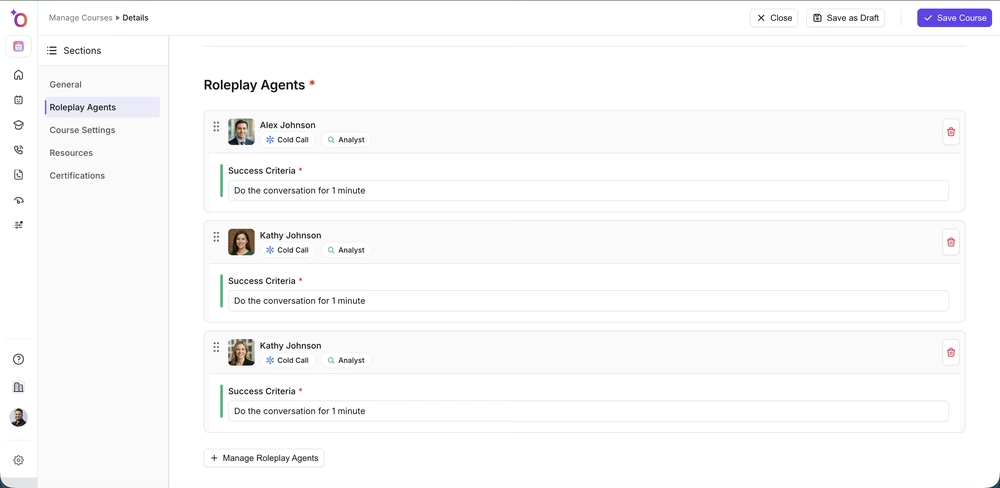
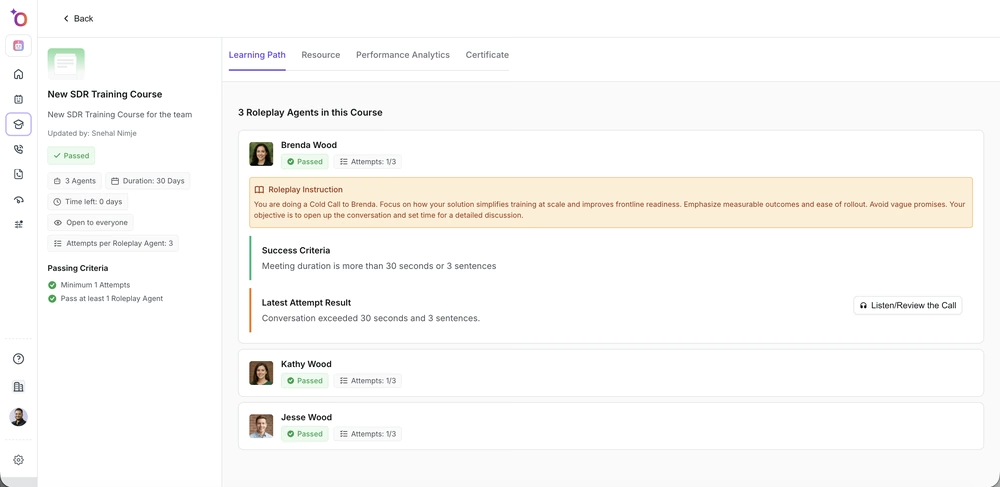
Sequence the roleplay agents in the course to match when a rep will actually encounter each scenario. If reps do not start taking discovery calls until week two, the discovery roleplay should unlock in week two, not be available day one alongside everything else. Learners complete what feels relevant right now, not what is theoretically relevant later.
Combine roleplay with workflow simulation in the same course
If a rep will both have a conversation and then update a CRM record after that conversation, both should be practiced in the same training sequence. Add the simulation step to the course immediately after the corresponding roleplay. Reps who practice both together retain more and make fewer errors when they go live.
Measuring learning effectiveness for stakeholders
Report before and after, not just after
Baseline scorecard data before a training program starts. Pull the same scorecard criteria two weeks after the program ends. The delta is your effectiveness metric. This is the data L&D needs to justify budget and expand programs.
Separate completion from mastery in your reports
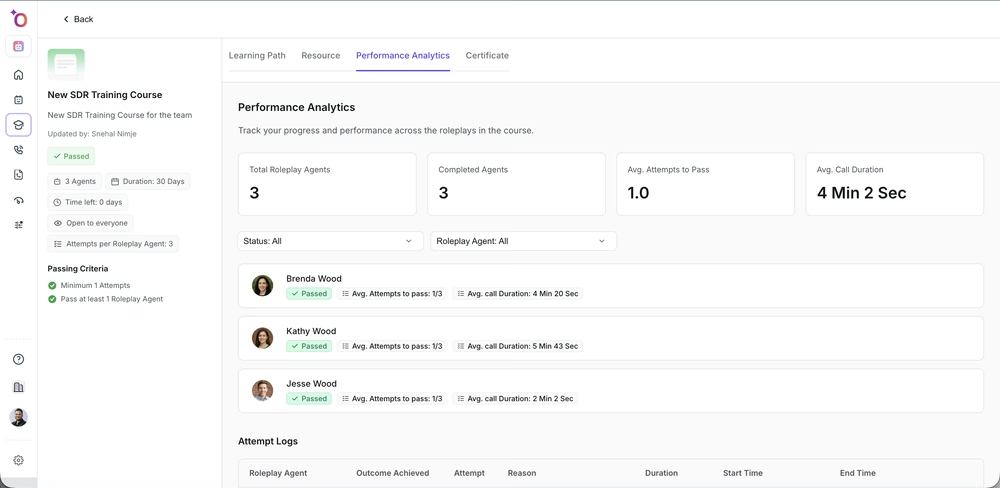
When reporting to leadership, show both completion rate and certification pass rate. A program with 90% completion and 60% certification pass rate has a problem — either the content is not preparing people well, or the threshold is set too high. Showing both metrics forces the right conversation.
Track certification currency, not just initial certification
A rep who passed a certification eight months ago may not reflect current messaging. L&D teams at fast-moving companies set expiry dates on certifications and require recertification annually or when messaging significantly changes. Outdoo certifications are dated, so you can build recertification cadences around them.
If you need help, contact us at support@outdoo.ai.